08May
Family heirlooms and jewelry are among the most irreplaceable possessions a person can own. Unlike most assets, their value is not purely monetary. A grandmother's gold bracelet, an ancestral jade pendant, or a wedding ring passed down through generations carries meaning that no insurance payout can fully restore.
Yet many people in Singapore store these items at home with little more than a drawer lock or a basic residential safe for protection.
This guide covers the real risks facing heirlooms and jewelry stored at home, the limitations of home insurance, and the storage options available for those who want more reliable protection.
The Risks of Storing Heirlooms and Jewelry at Home
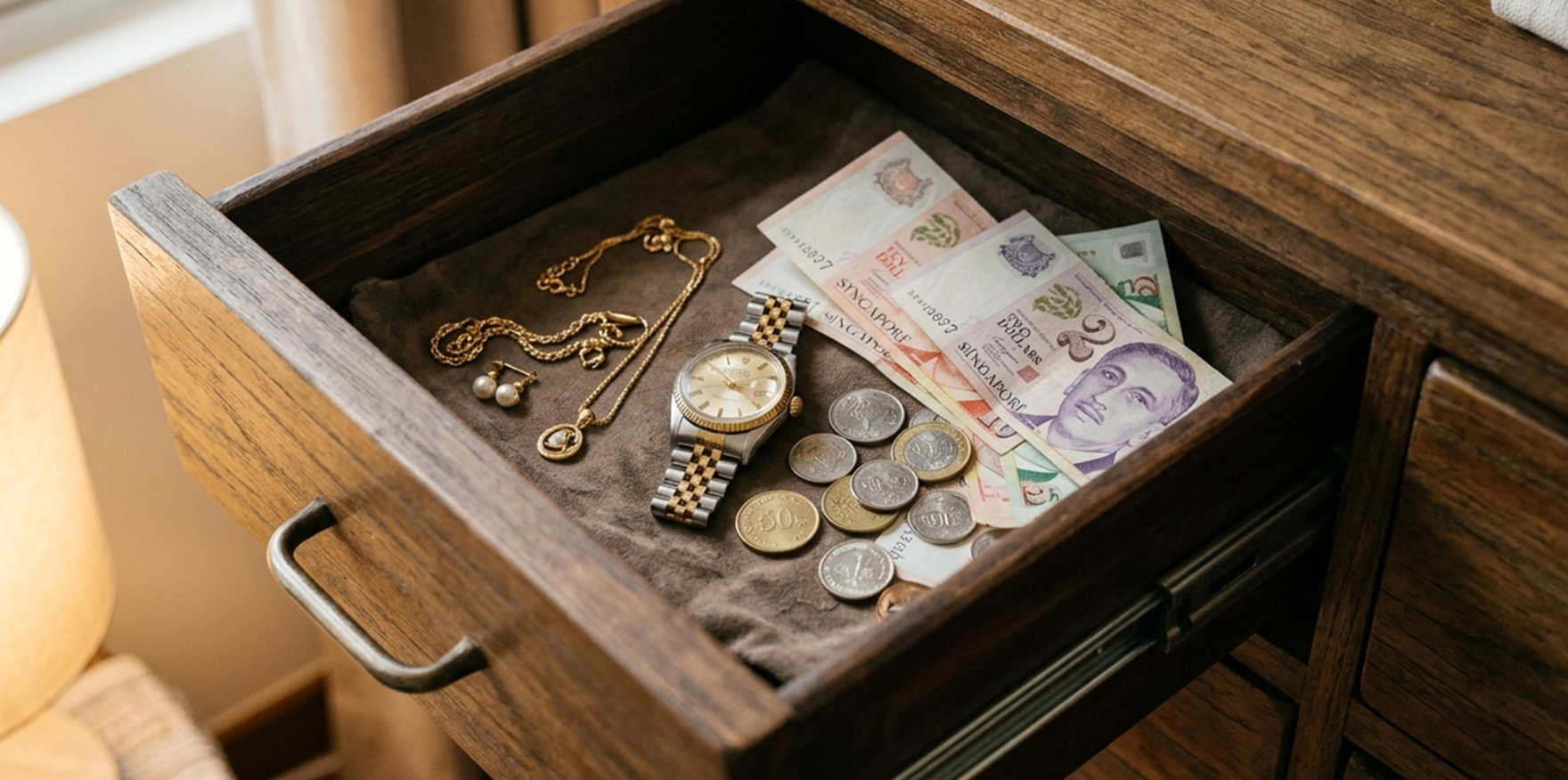
Burglary by Organized Syndicates
Singapore is one of the safest cities in the world. But even here, the risk to valuables stored at home is real and documented.
Between June and August 2024, foreign syndicates targeted at least 10 landed properties across Singapore, stealing an estimated S$3.85 million in cash, jewelry, and luxury goods. Only S$1.36 million was recovered. Suspects entered by scaling walls and fences, spent minimal time on the premises, and exited quickly to avoid detection.
In one case, two men from a criminal syndicate broke into a Windsor Park Road property and made off with S$570,100 in jewelry belonging to a 53-year-old woman. S$390,200 of that jewelry was never recovered. In December 2024, a separate pair of Chinese nationals were arrested after burgling two homes in Holland and Buona Vista, again targeting cash, jewelry, and branded goods. The Singapore Police Force confirmed they could not rule out a link to the earlier syndicate.
According to SPF's Annual Crime Brief 2024, crimes committed on residential properties typically targeted valuables such as cash, jewelry, smartphones, designer handbags, and watches.
These incidents reflect a consistent pattern: residential properties, regardless of their size or apparent security, remain a target for organized theft.
Fire and Water Damage
Home fires pose a separate and equally serious risk. Most consumer-grade residential safes are rated for only 30 to 60 minutes of fire resistance. In a sustained structural fire, that rating provides limited protection.
Singapore's standard HDB fire insurance covers the structure and fixtures of a flat, but does not cover home contents, including jewelry and heirlooms. A separate home contents policy is required. Even with one in place, coverage for high-value items is subject to sub-limits that often fall well short of the actual value of a jewelry collection.
Water damage from flooding, leaks, or burst pipes presents a further risk to delicate pieces, particularly those with gemstones, enamel work, or organic materials such as ivory or pearl.
Theft by Persons Known to the Owner
Not all theft is committed by strangers. In December 2024, a Singapore woman was convicted after stealing and pawning her mother-in-law's jewelry to pay off credit card debt. The jewelry had been kept in a home safe. Jewelry and heirlooms stored at home are accessible to anyone who lives in or regularly visits the property.
The Limits of Home Insurance
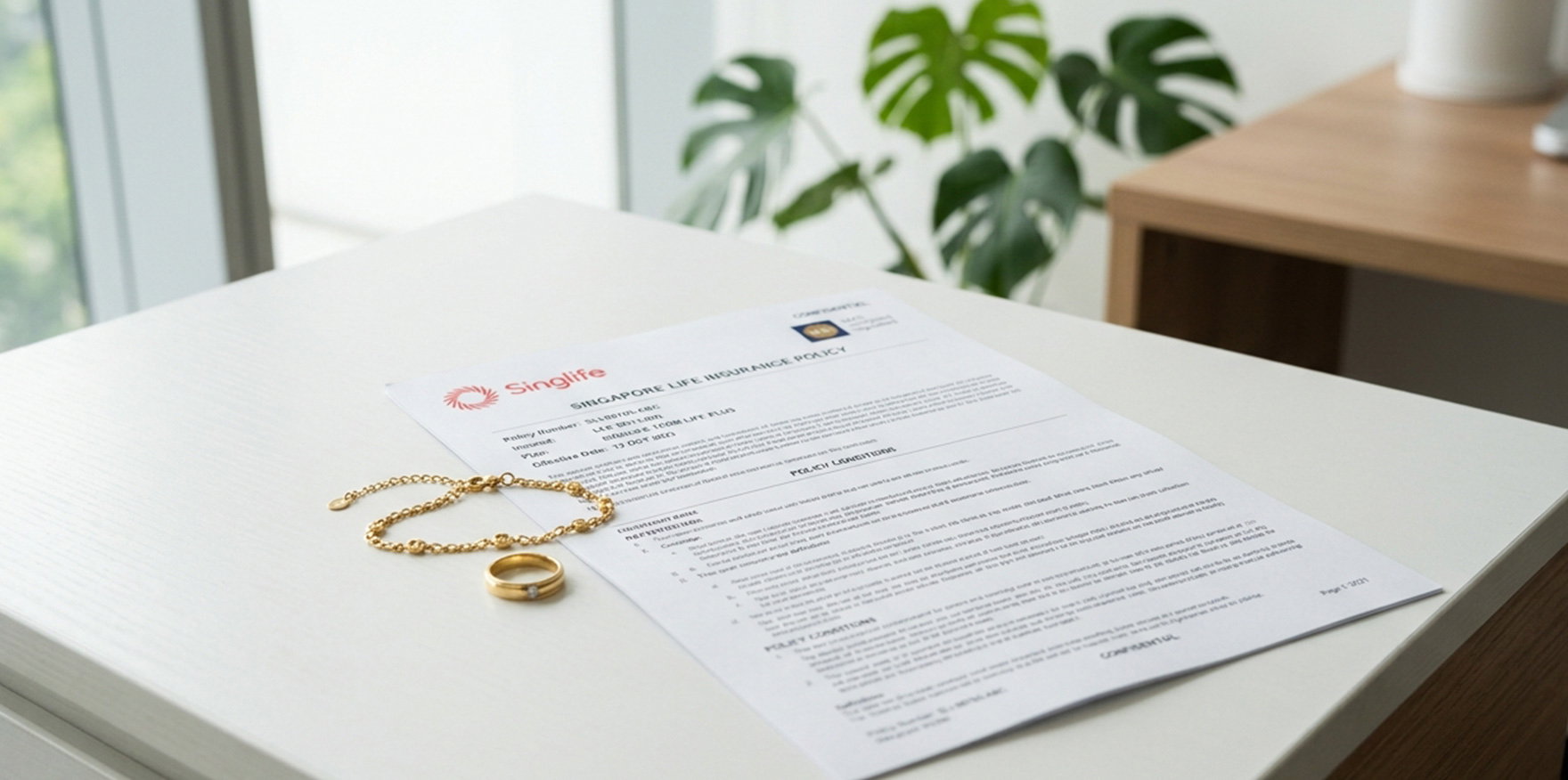
Many residents assume that a home contents insurance policy provides adequate coverage for jewelry and heirlooms. In practice, coverage is more constrained than most policyholders realize.
Standard home contents policies in Singapore apply sub-limits to high-value items. Jewelry, watches, and collectibles are typically grouped into a single category with a combined cap, which may cover only a fraction of the total value of a collection. Policies generally require the cause of loss to be a named peril, meaning accidental loss, misplacement, or damage not caused by a listed event is excluded.
No home insurance policy can restore sentimental value. A payout for a lost heirloom covers its assessed market value, not its significance to a family.
Home Storage Is Not the Answer
Physical assets stored at home carry inherent risks regardless of location. Most residential safes offer limited fire resistance and can be removed or bypassed entirely. Standard home insurance policies typically impose sub-limits of S$5,000 to S$20,000 on all valuables, far below the value of most meaningful collections.
For international investors, the risks go further. Assets kept in a home country with weaker institutional frameworks are exposed to political instability, currency controls, and the risk of government seizure. Singapore's legal framework explicitly protects privately stored assets, with no history of government confiscation of gold or private property held in vaults, making it a jurisdiction of choice for wealth stored outside the banking system.
Storage Options for Heirlooms and Jewelry in Singapore
At Home
Keeping jewelry and heirlooms at home offers convenience, but the risks outlined above apply in full. A heavy residential safe offers limited protection against a determined burglar and inadequate fire resistance for a sustained fire. For a closer look at what residential safes can and cannot protect against, refer to our guide on home safe boxes.
The Singapore Police Force advises residents to avoid keeping large amounts of valuables at home and to consider alternative storage arrangements for high-value items.
Bank Safe Deposit Boxes
Banks in Singapore, including DBS, OCBC, and UOB, offer safe deposit box services, but access has become progressively restricted. OCBC and UOB limit the service to Premier or Private Banking clients maintaining minimum balances of S$200,000 and above. DBS requires at minimum a basic account and is more accessible, though boxes at many branches are waitlisted for standard account holders.
For those who qualify, structural limitations apply. Bank safe deposit boxes are accessible only during branch operating hours, typically Monday to Friday and Saturday mornings. A staff member accompanies every visit. Upon the death of the account holder, the box is frozen until a Grant of Probate is obtained, a process that can take a year or more, leaving heirlooms inaccessible when family members may need them most.
Manual Private Vault Operators
Manual private facilities such as SECOM and Cisco offer safe deposit boxes where a staff member accompanies clients during every access. They generally operate during business hours and are closed on Sundays and public holidays. While security standards are typically high, the accompanied access model means a third party is present at all times during visits.
Automated Private Vault Operators
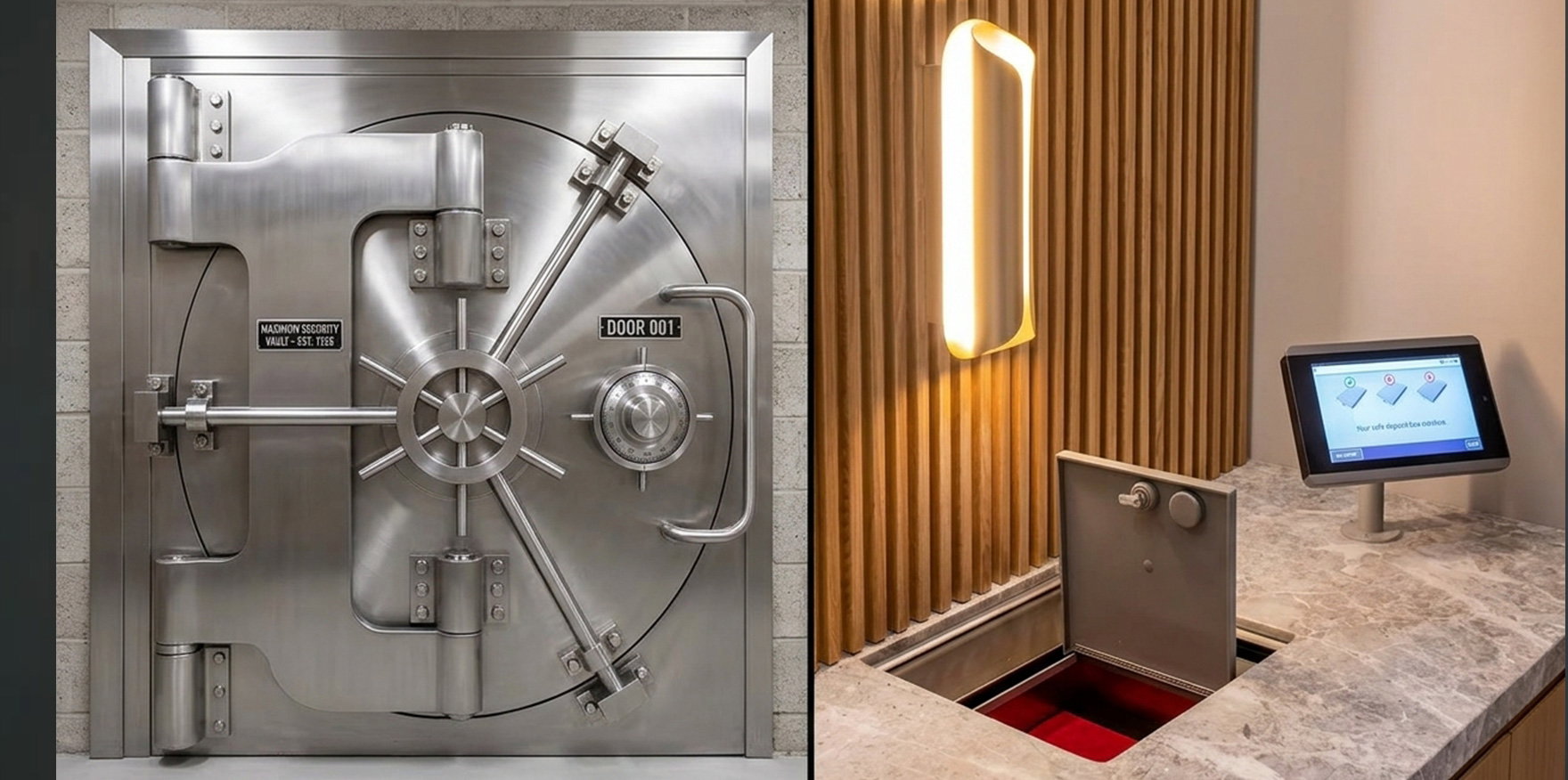
Automated facilities use robotic retrieval systems to deliver deposit boxes to a private room. There is no staff presence during access. All automated providers in Singapore offer 24/7 access, every day of the year. For a side-by-side breakdown of what each provider offers, see our comparison of automated safe deposit boxes in Singapore.
For families storing jewelry and heirlooms, items that may not need to be accessed regularly but must remain secure and retrievable at any time, this model offers meaningful advantages over bank and manual options.
What to Consider When Choosing Storage for Heirlooms and Jewelry
Privacy during access: Automated vaults deliver the box to a private room with no staff involvement, removing the need for a third party to be present during any visit.
24/7 availability: Access requirements do not follow banking hours. Round-the-clock availability ensures items are retrievable at any time.
Fire protection: A professional gas suppression system suppresses fire without water, protecting delicate pieces from both heat and sprinkler damage. This is categorically different from the fire resistance ratings of residential safes.
Succession planning: A safe deposit box sealed on the account holder's death can delay family access to heirlooms significantly. Providers that offer will custodian services or allow joint access arrangements prevent this complication.
Learn more about where and how to store your will in Singapore.
Administrative control: Any change to who can access a box should require verified consent from the registered holder. This prevents unauthorized modifications to access rights.
Flood protection: Facility elevation matters. A vault located at significant height above water level reduces flood risk in ways that home storage cannot replicate.
STARVAULT: Automated Safe Deposit Box Storage in Singapore
STARVAULT is an automated private safe deposit box facility located at BOXPARK, 506 Chai Chee Lane, Singapore. It is operated by BOXPARK Pte Ltd, a subsidiary of Dou Yee International, a company established in 1982 that owns the building outright.
What STARVAULT Offers
- 24/7 access, every day of the year. This includes public holidays, with no appointment required.
- Five-step authentication. Gaining access requires facial recognition, card access, fingerprint verification, PIN code, and a physical key. Only the registered account holder or an explicitly designated person can retrieve a box.
- Manless vault. Boxes are stored in a sealed, steel-reinforced concrete vault and delivered by a robotic system to a private viewing room. No staff member can enter the storage area at any time, except during annual servicing, where tight operating procedures are observed.
- Real-time access notifications. An email notification with a timestamp is sent every time a box is accessed, giving account holders a complete record of all activity.
- OTP governance. Any change to account access, including adding or removing authorized users, requires one-time password verification from the registered holder. STARVAULT is the only automated provider in Singapore with this feature.
- Gas suppression fire protection. The system suppresses fire without water, protecting jewelry, textiles, and delicate heirlooms from both fire and sprinkler damage.
- Flood resilience. The facility is located 29 meters above sea level.
- Free Will Custodian Service. STARVAULT offers a complimentary will custodian service. Clients store their original will and designate executors via Form W, avoiding the probate complications that arise when a will is held in a bank SDB frozen upon the holder's passing.
- No banking relationship required. Open to Singaporeans, permanent residents, and foreigners. Only a verifiable phone number and email address are needed.
- Monthly contracts. STARVAULT is the only safe deposit box provider in Singapore, bank or private, offering a minimum commitment of one month.
Pricing
| Box Size | Monthly Plan | 1-Year Prepay | 3-Year Prepay |
| Small | S$60/month | S$36/month (40% off) | S$30/month (50% off) |
| Medium | S$110/month | S$66/month (40% off) | S$55/month (50% off) |
A one-time administrative fee of S$100 and a refundable security deposit of S$200 apply to both box sizes. The monthly plan has a minimum period of one month. The 1-year prepay plan currently includes a promotion of 2 months free.
Conclusion
Home storage of jewelry and heirlooms carries real exposure to organized burglary, fire, flood, and insider theft. Home insurance sub-limits rarely cover the full value of a collection, and no payout restores what is irreplaceable.
In Singapore, alternatives exist. Automated private vault facilities offer professional-grade security, complete privacy during access, 24/7 availability, and succession planning features that bank safe deposit boxes do not provide.
STARVAULT is one option worth considering. Schedule a tour, get a personalized quote, or contact the team to find out more contact the team